
Cybersecurity before Christmas is particularly critical for companies. The weeks leading up to the turn of the year are characterized by hectic activity and end-of-year pressure. While employees mentally prepare for the holidays, cybercriminals deliberately adapt their attack strategies for the “quiet season.” They speculate that a thinly staffed IT department, distracted employees, and weakened internal control mechanisms provide the perfect attack surface. Experience shows that a digital emergency on December 24 is far more costly and difficult for companies to manage than any other incident during the regular business year.
1. The increased risk: The attack logic of the holidays
From the attackers’ perspective, the pre-Christmas and holiday period is a high-risk phase, as several critical factors converge. The IT department is often staffed at only a minimum level, which drastically prolongs response times to alerts or actual incidents. At the same time, cybercriminals exploit the high volume of commercial emails – from parcel deliveries and donation appeals to festive greetings – as ideal camouflage for their attacks. An email with an ostensibly time-critical subject line such as “Final Reminder” is often opened more uncritically by distracted or stressed employees and, if necessary, processed without thorough review.
In addition, there is an increased supply-chain risk: If your suppliers and external service providers are also in holiday mode and not maintaining their systems, attackers can find vulnerabilities in your own chain via these links. The worst-case scenario: Out of fear of disrupting ongoing operations just before the holidays, necessary updates and patches are postponed until the new year, leaving critical security gaps open unnecessarily long.
2. Proactive protection: The most important measures before shutdown
To minimize the risk of a costly outage, IT management must now proactively address the following key areas:
Strengthening the human firewall
Since attackers exploit the emotional and time-critical atmosphere of the Christmas season, the human vulnerability often represents the most critical point of entry. IT management should therefore carry out a final, targeted awareness campaign shortly before the start of the holidays. This must explicitly warn against fraudulent emails relating to supposed parcel deliveries, donation campaigns, or alleged invoices for Christmas orders. A well-timed simulated phishing attack in the final working weeks can significantly increase the vigilance of the entire workforce and is one of the most effective preventive measures to close the doors to social engineering attacks.
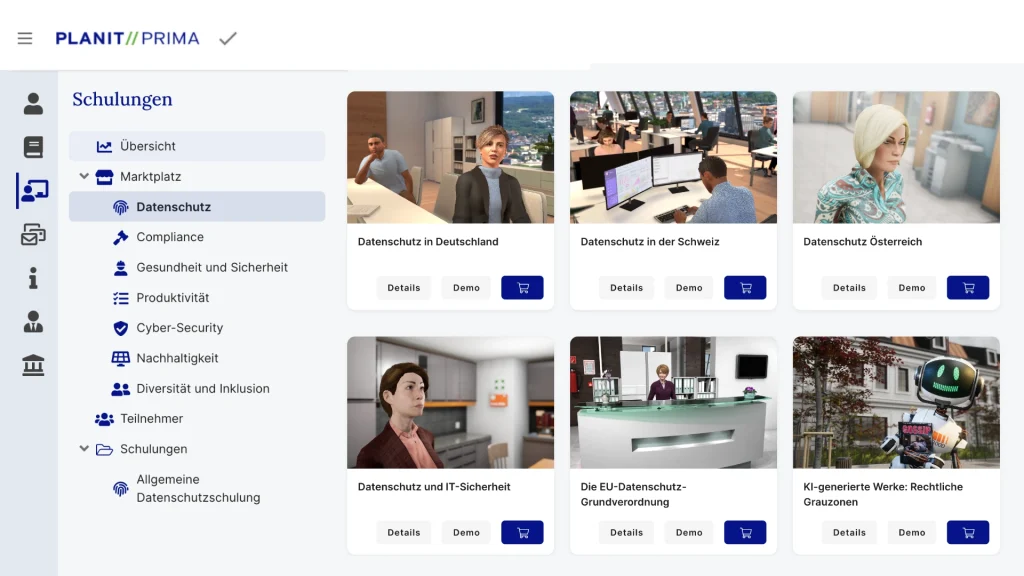
Modern and effective tools for raising employee awareness have proven to be e-learning solutions in particular. Find out more now about our cyber security training courses! Cyber Security Training – PLANIT // PRIMA
Ensuring backup integrity and physical separation
The threat posed by ransomware remains high even over the holidays. The only reliable guarantee of a quick and damage-free restart after successful encryption is a current, functional backup. It is therefore essential to perform a test restore immediately before shutdown and to confirm the functionality and currency of the backup copies. Also check compliance with the 3-2-1 rule, i.e.: three copies of the data, on two different storage media, with one copy stored externally and offline. This offline aspect is the decisive security factor before Christmas. Physically disconnect the external backup copy from the network before the main workforce goes on holiday. Only this physical isolation prevents sophisticated ransomware from also encrypting your backup copies in the event of an attack and making recovery impossible.
Completing system hardening and patch management
Open, known vulnerabilities must not be carried over into the new year over the holidays. All critical security and functional updates, especially for central components such as firewalls, VPN gateways, and email servers, must now be prioritized and deployed. Also use this time to remove unnecessarily broad access rights in accordance with the principle of least privilege. Anyone who does not need remote access over Christmas should not have it. The remaining access points, especially VPN and remote desktop services, must be protected by multi-factor authentication (MFA). This is an absolute basic requirement for any remote access and should be firmly established as a non-negotiable rule before systems go into “lockdown mode.”
Activating and adapting the incident response plan
An emergency plan is only as good as its adaptation to the reality of the holiday period. On-call IT staff must be equipped with updated contact chains and all necessary access credentials. Above all, however, the process for a data protection incident must be clear. Since a successful cyberattack almost always triggers a reporting obligation under Art. 33 GDPR, the responsible personnel must know how to inform management and the data protection officer immediately. According to some supervisory authorities, the statutory 72-hour deadline for reporting to the supervisory authority continues to run during holidays and weekends. Automating the reporting process and clear documentation help to meet these deadlines and ensure compliance with legal obligations.
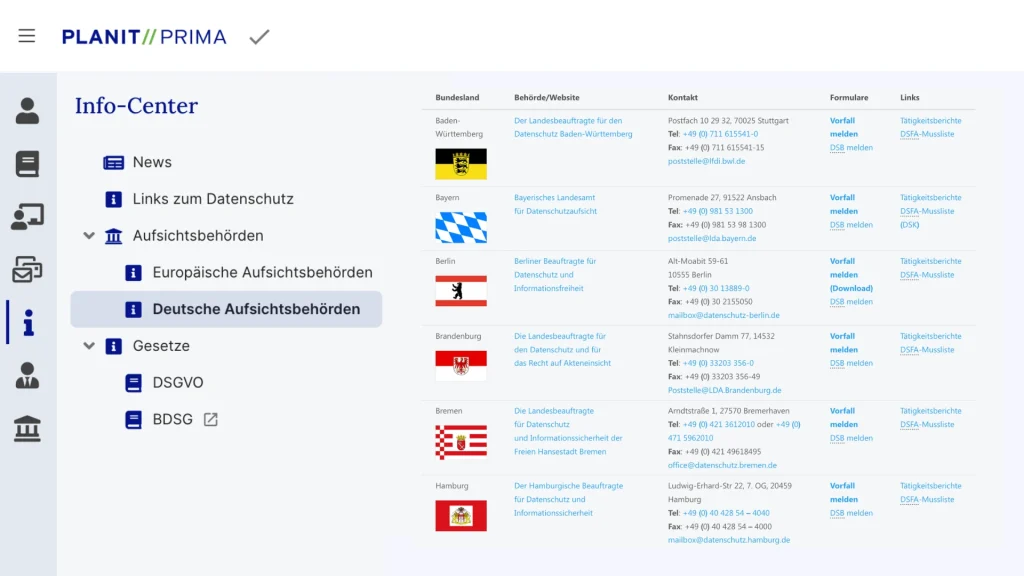
To streamline incident reporting and ensure that all deadlines and reporting obligations under the GDPR are automatically tracked and escalated to the right parties, a dedicated solution is essential. We have summarized clearly here how you should handle data protection incidents: Cyber Security Training – PLANIT // PRIMA
Clear rules for working from home and unsecured networks
Working outside the office during the holidays poses an increased security risk. Supervisors should once again urgently remind employees who perform remote work during their vacation of the policy regarding the use of private devices. In addition, it must be made clear that access to company data is permitted exclusively via the company’s own secure VPN. The use of public, unsecured Wi-Fi networks in airports, cafés, or hotels must be strictly prohibited for any processing of company data during this period, as there is a high risk of credentials being intercepted.
Conclusion: Foresighted security is the best Christmas present
The Christmas season is no reason to lower cybersecurity standards; on the contrary, it requires maximum alertness and proactive protection. The potential costs of an incident during this high-risk period exceed by far the effort now invested in patches, backup tests, and employee awareness.
Your IT managers now have the task of locking the digital doors: testing backups, enforcing MFA, patching systems, and sharpening the emergency plan for the holiday scenario. Only through this foresighted diligence can you effectively protect your company from unpleasant surprises and ensure business continuity over the turn of the year.
| Do you need a solution for the efficient documentation of your incident response plan and for meeting reporting obligations in the event of data protection incidents, so that you can act in compliance with the law even in exceptional situations? Get to know PLANIT // PRIMA now! |